


A travel day can go wrong in plenty of ways. Flights get delayed, hotel check-ins take longer than expected, and plans change without warning. But there is one small problem that can make everything unnecessarily difficult: a dead phone.
Today, a smartphone is much more than a communication device. It holds tickets, maps, booking confirmations, payment apps, travel photos, and important contact details. When the battery reaches 1%, the entire trip can suddenly feel more complicated.
That is why a power bank has become one of those travel essentials people often overlook—until they desperately need one. Anker offers a wide range of portable charging solutions designed for different devices and travel habits, making it easier to find an option that fits your journey.
A Dead Phone Can Interrupt More Than You Think
Running out of battery while travelling is not just about missing a few messages.
It can affect access to important tools, including:
- Boarding passes and digital tickets
- Google Maps and navigation apps
- Hotel and accommodation confirmations
- Digital wallets and payment apps
- Travel guides and local recommendations
- Translation apps
- Emergency contacts
- Photos and videos
- Ride-sharing and transport apps
A power bank acts as a simple backup when access to a wall outlet is not guaranteed.
The best part is the freedom it provides. Instead of constantly checking whether your battery will survive until evening, you can actually use your phone throughout the day.
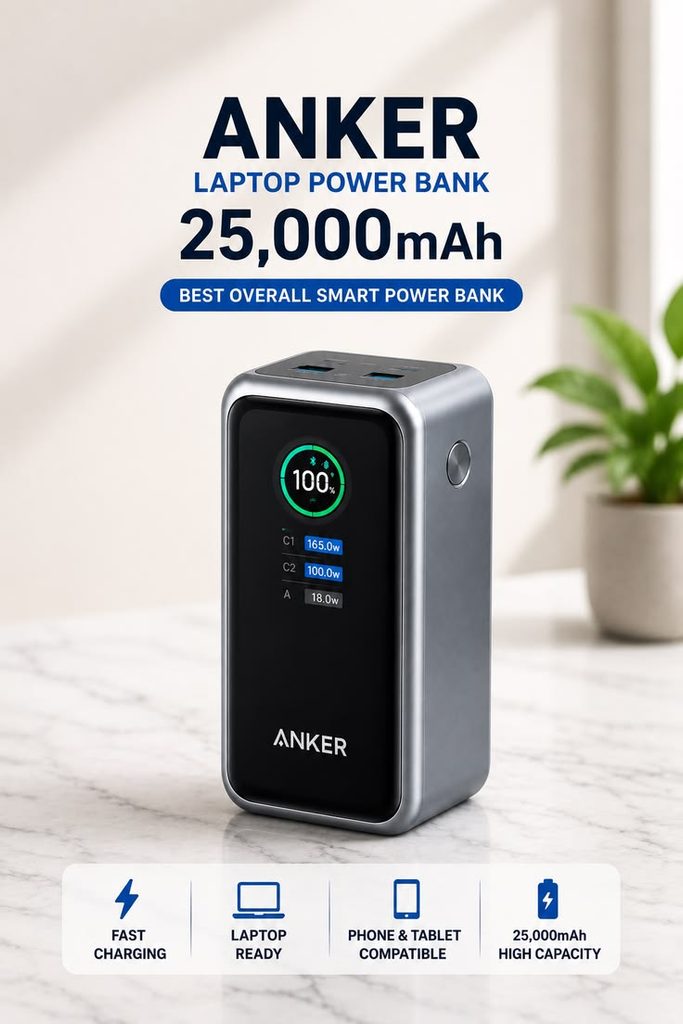
Why “I’ll Find a Socket Later” Is Not a Travel Strategy
Almost every traveler has made this mistake.
You leave the hotel with 40% battery and think it will be enough. Then the day gets longer.
You use Maps to navigate a new city. Take photos. Search for restaurants. Check train times. Make payments. Suddenly, the battery is flashing red.
Finding a charging outlet can also be harder than expected.
You may encounter:
- Busy airport charging stations
- Limited power outlets at train stations
- Cafés where every socket is occupied
- Long bus journeys without charging ports
- Outdoor destinations with limited electricity access
A portable power bank removes the need to depend on public charging spots.
Instead of searching for electricity, you already have it in your bag.
The Modern Traveler Carries More Than One Device
Travel technology has changed.
Many people no longer travel with only a smartphone. A typical carry-on may also include wireless earbuds, smartwatches, tablets, cameras, or laptops.
That makes choosing the right power bank important.
Before buying one, think about what you actually carry.
A Compact Power Bank May Work Best If You:
- Mainly need to charge a smartphone
- Prefer travelling with a small bag
- Take short weekend trips
- Want emergency backup power
A Higher-Capacity Option Could Make More Sense If You:
- Take long-haul flights
- Travel for several days
- Use your phone heavily for work or navigation
- Carry multiple devices
Higher-Output Charging May Be Useful For:
- Digital nomads
- Remote workers
- Content creators
- Travelers carrying compatible laptops or tablets
Anker’s range includes compact portable chargers alongside larger-capacity and higher-output options, allowing travelers to choose based on their actual needs rather than simply buying the biggest battery available.
What Actually Makes a Good Travel Power Bank?
Not every power bank is ideal for every trip.
A large battery might provide more power, but it can also add weight to your bag. A smaller option might be easier to carry but may not last through multiple charging sessions.
The right balance depends on several factors.
1. Battery Capacity
Capacity determines how much backup power you have.
For short trips, a smaller capacity may be enough for occasional phone charging. Longer journeys and multi-device setups may require more.
2. Portability
A power bank should be easy to carry.
If it is too large or heavy, you may decide to leave it behind—which defeats the purpose.
3. Charging Speed
Travel schedules can be unpredictable.
Fast charging becomes useful when you only have a short window to recharge before boarding a flight or leaving for the day.
4. Multiple Charging Options
Travelers with several devices may benefit from multiple ports.
This can reduce the need to carry separate charging accessories for everything.
5. Cable Convenience
Cables are easy to lose.
Power banks with integrated or retractable cable designs can help reduce clutter and eliminate one more item from the packing list.
Small Power Bank, Big Difference
The most useful travel products are not always the biggest or most expensive.
Sometimes, the smallest item solves the most annoying problem.
A power bank can sit quietly inside your backpack all day. You may forget it is even there.
Then your battery drops to 5%.
Suddenly, it becomes the most valuable item in your bag.
That is the real appeal of portable charging. It works as a backup for unpredictable situations:
- Flight delays
- Long train journeys
- Road trips
- Full-day sightseeing
- Outdoor adventures
- Music festivals
- Business travel
- International trips
You might not need it every hour.
But when you need it, you really need it.
Less Cable Chaos, More Travel Freedom
Technology is useful until you have to pack it.
Most travelers have experienced opening a bag and finding a tangled collection of charging cables.
One for the phone.
Another for earbuds.
One for a smartwatch.
Another for a laptop.
The more devices you carry, the more complicated the situation becomes.
This is why modern charging accessories are increasingly focused on convenience. Multi-device charging and built-in cable options can simplify a travel setup and reduce the number of accessories you need to remember.
Anker offers selected power bank designs with features aimed at improving portability and cable management, which can be particularly useful for people who prefer travelling with fewer loose accessories.
Choose Your Power Bank Based on Your Travel Personality
There is no single power bank that works perfectly for everyone.
Your ideal option depends on how you travel.
The Weekend Explorer
You probably need:
- A lightweight design
- Enough backup for your smartphone
- Easy portability
A compact power bank may be the most practical choice.
The Long-Haul Traveler
You may want:
- Higher battery capacity
- Multiple charging sessions
- Support for more than one device
Long flights and unexpected delays make additional backup power valuable.
The Digital Nomad
Your priorities might include:
- Higher charging output
- Multiple device support
- Greater capacity
- Compatibility with your work devices
For this type of traveler, portable power becomes part of the work setup rather than just an emergency accessory.
The Content Creator
If your phone is constantly being used for:
- Photos
- Videos
- Editing
- Social media
- Navigation
Battery life disappears quickly.
A reliable power bank can help keep the content flowing without forcing you to stop every few hours.
Anker Fits Naturally Into Modern Travel
Anker has become a recognizable name in charging technology because its product range covers different needs.
Not every traveler wants a large battery.
Not every traveler needs laptop-level charging.
Some simply want a compact option that can rescue their phone at the end of a long day.
Others need something more powerful.
That variety makes an Anker power bank worth considering when building a travel setup. The focus should be on choosing a model based on your devices, trip length, and portability preferences.
Before purchasing, it is worth checking:
- Capacity
- Charging output
- Number of ports
- Device compatibility
- Physical size and weight
- Cable features
- Current airline battery restrictions
The last point is particularly important for air travel, as power bank rules can vary. Always check your airline’s current requirements before packing.
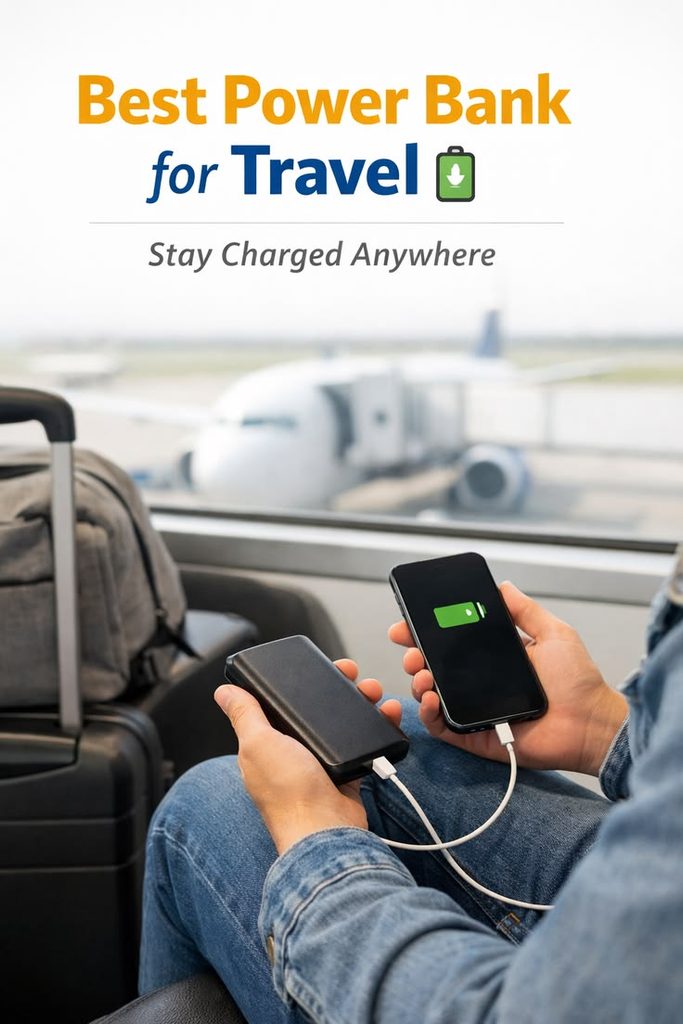
The Real Benefit? You Stop Thinking About Battery Life
Perhaps the best thing about carrying a power bank is psychological.
You stop obsessively checking your battery percentage.
You can take another photo.
Open Maps without hesitation.
Watch something during a delay.
Call a ride late at night.
Use your phone the way you normally would.
A good travel accessory should make life easier without demanding attention. That’s exactly what a portable charger does.
It stays in the background until the moment you need it.
Final Take
Travel has become increasingly digital, and staying connected now plays a bigger role in almost every journey.
Your phone holds your plans, directions, tickets, memories, and connection to the outside world. Letting it die in the middle of a trip can turn a small inconvenience into a much bigger problem.
An Anker power bank is worth considering because portable charging gives travelers something valuable: independence from the nearest wall socket.
The smartest choice is not necessarily the biggest or most expensive model. It is the one that fits your travel style and provides enough backup when you need it.
Before your next trip, your packing checklist might include:
- Passport
- Tickets
- Headphones
- Travel adapter
- Comfortable shoes
- Anker power bank
Because travel plans can change.
Your battery doesn’t have to die with them.


